|
|
|
Description
|
|
HardBD & Active'26 will be a one-day
workshop co-located with ICDE'26. The aim of this workshop is to bring
together researchers, practitioners, system administrators, and others
interested to share their perspectives on exploiting new hardware technologies
for data-intensive systems, and to discuss and identify future directions and
challenges in this area. The workshop aims at providing a forum for academia
and industry to exchange ideas through research and position papers.
[
Go to Top ]
|
|
Topics
|
|
Topics of interest include but
are not limited to:
- Data Management on New Hardware Technologies (e.g., GPUs, FPGAs,
DPUs, ASICs, SSDs, NVMs, RDMA, CXL, Quantum as accelerators)
- Main Memory Data Management (e.g. Multi-Core, Cache, SIMD)
- Data Management in Software-Hardware Co-design Architectures
- Distributed Data Management Utilizing New Network Technologies
and/or New System Platforms (e.g., Disaggregated Storage,
Disaggregated Memory)
- Novel Applications of New Hardware Technologies in Query Processing, Transaction Processing, Big Data Systems, or AI systems
- Benchmarking, Performance Models, and/or Tuning of Data-Intensive
Workloads on New Hardware Technologies
[
Go to Top ]
|
|
Author and Submission Guidelines
|
We welcome submissions of original, unpublished research papers that are
not being considered for publication in any other forum. This includes
early-stage or in-progress work targeting future publication at leading
database conferences or journals.
Papers should be prepared in
the IEEE
format
and submitted as a single PDF file. The paper length should not exceed 6 pages
excluding the bibliography.
The submission site is https://cmt3.research.microsoft.com/HardBDActive2026.
(Note: The Microsoft CMT service was used for managing the
peer-reviewing process for this conference. This service was provided for free
by Microsoft and they bore all expenses, including costs for Azure cloud
services as well as for software development and support.)
[
Go to Top
]
|
|
Important Dates
|
| Paper submission: |
January 19, 2026
January 26, 2026 (Monday) 11:59:00 PM PT
|
| Notification of acceptance: |
February 23, 2026 (Monday)
|
| Camera-ready copies: |
March 9, 2026 (Monday)
|
| Workshop: |
May 4, 2026 (Monday)
|
[
Go to Top ]
|
|
Program
|
9:00-9:10 Welcome Messages
9:10-10:20 Session 1
10:20-11:00 Coffee Break
11:00-l2:30 Session 2
12:30-12:35 Closing Remarks
[
Go to Top ]
|
|
Keynote Talks
|
|
|
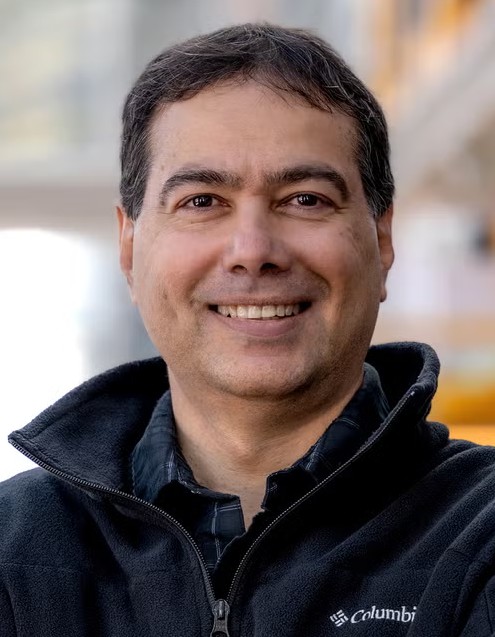
Towards Stateful Serverless Computing
Khuzaima Daudjee
University of Waterloo
|
Abstract:
Serverless computing has emerged as a dominant architecture for cloud applications, offering scalability and operational simplicity that benefit both developers and users. Traditionally, serverless platforms adopt a stateless execution model, where each function invocation is isolated and instantiated independently. I will present Ephemeros, a serverless framework designed to support stateful function execution. Ephemeros enables direct inter-function communication, bypassing the limitations of conventional invocation mechanisms and supporting richer coordination patterns and workflows across function instances.
Bio:
Khuzaima is interested in designing and building large-scale systems that store and manage data, including provision of system-level support for data-intensive applications such as streaming, graph processing and machine learning. He is an ACM Distinguished Scientist.
|
|
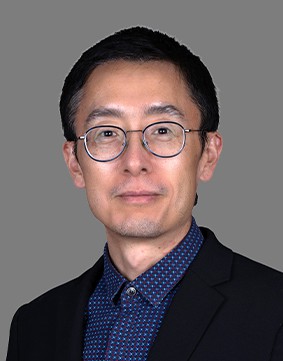
The Persistence of Big Memory
Steve Liu
Mohamed bin Zayed University of Artificial Intelligence & McGill University
|
Abstract:
Big memory aggregates distributed memory into a unified address space. It has received significant attention from both academia and industry due to its salient features of high performance and large capacity. This talk revisits the evolution of system and architectural designs to elaborate on the fundamental principle underlying big memory, and then introduces state-of-the-art techniques to unlock its full potential. For clarity and accessibility, the talk uses a write-optimized hashing index for persistent memory as a case in point, building in-memory indexing structures to minimize write amplification while preserving low-latency access. Big memory empowers storage applications with high-throughput, low-latency, and scalable persistent capabilities.
Bio:
Dr. Steve Liu is a Full Professor of Machine Learning, and a Full Professor of Computer Science at Mohamed bin Zayed University of Artificial Intelligence. (MBZUAI). He is also a Full Professor in the School of Computer Science at McGill University, and a Professor (on a Courtesy Appointment) of Mathematics and Statistics at McGill University.
Dr. Liu has held a range of leadership and administrative roles across both academia and industry. He served as Vice President of R&D, Chief Scientist, and Co-Director of the Samsung AI Center in Montreal, where he led research and development of AI innovations across telecommunications, mobile computing, IoT, and embodied AI. He was also Chief Scientist at Tinder Inc., where he directed research and innovation for one of the world’s largest dating and social discovery platforms, valued at over $10 billion. He served as Associate Vice President of Research at MBZUAI, where he led research strategy, operations, and innovation. He was the Samuel R. Thompson Chair Associate Professorship in the Department of Computer Science and Engineering at the University of Nebraska–Lincoln. Earlier in his career, he worked at Hewlett-Packard Labs in Palo Alto and the IBM T. J. Watson Research Center in New York.
Dr. Liu is an IEEE Fellow, and a Fellow of the Canadian Academy of Engineering. He is an associate member at the Quebec AI Institute (Mila), and McGill Center for Intelligent Machines (CIM). He was the chair of ACM SIGBED from 2021-2025. His research interests focus on AI/Machine Learning, Sustainable Computing, IoT, Financial AI, and Cyber-Physical Intelligent Systems. He has published 5 books and over 400 research papers in major peer-reviewed international journals and conference proceedings, and received 11 best paper awards from IEEE or ACM. He has served as an associate editor/advisor for several international academic journals and as a member of the technical or organizing committees of over 100 international conferences/workshops. He is a recipient of several awards, including the Mitacs Award for Exceptional Leadership — Professor, and the Outstanding Young Canadian Computer Science Researcher Prizes from the Canadian Association of Computer Science. Dr. Liu is also a serial entrepreneur and has advised/co-founded several high-tech startups.
|
|
Organizers
|
[
Go to Top ]
|
|
PC Members
|
- Amine Mhedhbi, Polytechnique Montréal
- Bingsheng He, National University of Singapore
- Danica Porobic, Oracle
- Dixin Tang, University of Texas, Austin
- Kai-Uwe Sattler, TU Ilmenau
- Thamir Qadah, Umm Al-Qura University
- Tianzheng Wang, Simon Fraser University
- Wolfgang Lehner, TU Dresden
- Xuan Zhou, East China Normal University
[
Go to Top ]
|
|